

News
What Is Arabica Coffee? How to Identify Arabica Beans
If you’ve ever enjoyed a cup of coffee made from Ethiopian beans, a Pour Over brew, or a cup with a reddish-brown hue, mild strength but an exceptionally fragrant aroma, then chances are you’ve already tasted Arabica coffee. However, while many people have experienced its unique flavor, not everyone knows exactly what the Arabica coffee plant is or how it’s brewed—especially since this variety is produced in relatively small quantities in Vietnam. Today, let’s explore more about this coffee plant with Tam Trinh Coffee Experience!
1. What Is Arabica Coffee?
Arabica coffee, also known in Vietnam as cà phê chè, has the scientific name Coffea Arabica. This coffee variety contains a relatively low caffeine content, ranging from 1–2%. Arabica is well-known for its gentle, refined flavor and its rich, complex aroma.
What is Arabica coffee? Arabica coffee originates from the southwestern highlands of Ethiopia. Historically, the Arabica coffee plant was first introduced in the 8th century. According to some accounts, a number of coffee beans were transported from Ethiopia to Yemen, where the Arabs began cultivating the plant in the late 14th century. For more than 100 years, the Arab world remained the sole supplier of coffee.
Later, coffee cultivation expanded to distant regions such as India, Ceylon (present-day Sri Lanka), Java, and Indonesia, establishing some of the world’s first commercial coffee plantations. Arabica was later discovered by the French and subsequently spread across the world by the Dutch. Today, Brazil and Colombia are the largest Arabica-growing regions globally. In Vietnam, Arabica can still be cultivated, but production remains limited and scattered. The regions best suited for Arabica include Sơn La, Đà Lạt – Lâm Đồng, Quảng Trị, and Nghệ An.

2. How to Identify Arabica Coffee
Biological Characteristics
Biologically, Arabica coffee plants typically grow between 2.5 to 4.5 meters in height. In terms of morphology, Arabica cherries have an elliptical shape and usually appear as single fruits on each node of the branch. Genetically, Arabica coffee has 44 chromosomes, which is more than double that of Robusta (22 chromosomes). Scientists also note that Arabica is a self-pollinating diploid species, meaning it has fewer variations and a lower chance of mutation throughout its growth cycle.
How to identify Arabica coffee
When it comes to productivity, each Arabica tree produces around 1 to 5 kg of cherries per season, which is relatively low compared to Robusta—often double that amount. Because of this, the cost of cultivating Arabica coffee is considerably higher than Robusta when calculated on the same growing area. Compared to Robusta, Arabica cultivation requires significantly higher investment on the same land due to its lower yield and more delicate growing conditions.

3. How to Brew Arabica Coffee
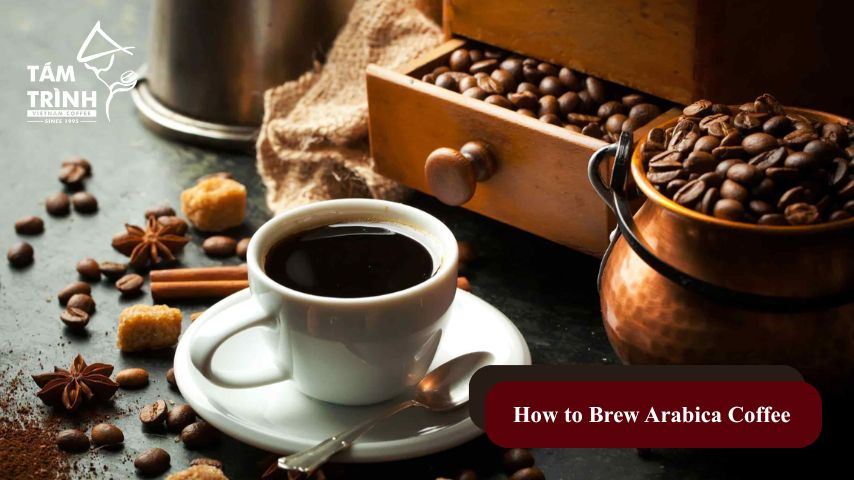
Arabica coffee offers a rich and diverse flavor profile, making it more popular among coffee enthusiasts compared to Robusta. It is commonly brewed using methods that best preserve its aroma and delicate notes, such as Syphon, Pour Over, and Moka Pot. These brewing techniques help retain the coffee’s full flavor, so drinkers often enjoy Arabica without milk or with only a small amount of milk or sugar.
Brewing Arabica coffee
Depending on personal taste, coffee experts also blend Robusta and Arabica to enhance aroma while reducing bitterness, especially in phin-brewed coffee. This combination is also used to create more balanced flavors in beverages like Espresso, Cappuccino, and other specialty drinks.
4. Arabica Coffee Bean Prices
Because Arabica is produced in smaller quantities in Vietnam, its price tends to be higher than other varieties.
- Green Arabica coffee beans typically range from 55,000 to 100,000 VND per kilogram.
- Roasted Arabica (natural roast) usually costs between 350,000 and 400,000 VND per kilogram.

5. Where Should You Buy Roasted Arabica Coffee to Ensure Quality?
There are many suppliers of Arabica coffee on the market today. However, to ensure quality and stable sources, you should carefully evaluate the supplier before making a purchase. Below are a few notes to help you choose a reputable provider:
- The supplier must have legal certification and relevant documents that guarantee product quality, such as food safety certificates or certificates for green coffee beans.
- The supplier should meet the standards for producing clean green coffee beans, including farm conditions, harvesting, processing, and storage.
- The supplier should also have a clear traceability system to ensure that the roasted coffee originates from trustworthy sources.
This article from Tam Trinh Coffee Experience has introduced the key characteristics of Arabica coffee and how to identify it. We hope this information helps you better understand this delicious coffee variety!
Tam Trinh Coffee Experience – A trusted supplier of premium green and roasted coffee beans from the Lâm Đồng highlands.
Roasting workshop: Thôn 4, Gia Lâm, Lâm Hà, Lâm Đồng
Product consultation hotline: 088 66 77 119