


News
What Is Cherry Coffee? Discover Its Origin, Characteristics, and Flavor Profile
In Vietnam’s coffee portfolio, besides the two main varieties, Robusta and Arabica, Cherry coffee plays an important supporting role. Thanks to its high adaptability and distinctive chemical characteristics, Cherry coffee is often used in processing and blending to create greater product diversity.
What Is Cherry Coffee?
Cherry coffee is the common name for coffee varieties belonging to the Coffea liberica species or the Excelsa variety. In Vietnam, because of its large leaves, wide canopy, and tall woody trunk, this coffee type is also known as jackfruit coffee. Its leaves are large, and when the fruit ripens, it gives off a light aroma reminiscent of ripe jackfruit.
Cherry coffee beans are usually larger than many other coffee varieties. When ripe, the cherries are bright red, oval-shaped, relatively large, and have a glossy skin. Compared with more common coffee types such as Arabica and Robusta, Cherry coffee has lower yields and is less commonly grown on a large scale.
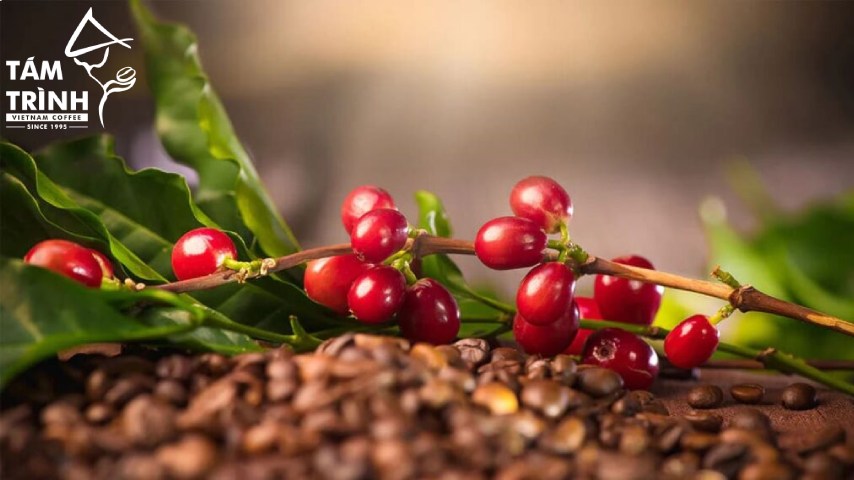
From a cultivation perspective, Cherry coffee is considered one of the most resilient coffee varieties. The tree has a deep taproot system, strong drought tolerance, and resistance to most common coffee plant diseases, such as coffee leaf rust and pink disease.
Origin of Cherry Coffee
Cherry coffee originated in Liberia, West Africa. This coffee variety was introduced to Vietnam during the French colonial period. Thanks to its strong biological characteristics, Cherry coffee was initially grown widely in regions with harsh climates, such as Brazil, Indonesia, the Philippines, and Vietnam, where Arabica could not thrive.
However, due to its low yield and longer fruiting period compared with Robusta, the cultivated area of Cherry coffee gradually declined. Today, it is mainly grown as an intercrop or used as a windbreak.

From a technical perspective, Cherry coffee has identification characteristics that are completely different from other coffee varieties.
Cherry coffee trees usually have tall woody trunks and can reach 10–15 meters in height if allowed to grow naturally, making them larger than Robusta or Arabica trees. The leaves are large, thick, dark green, and glossy. The tree can grow well in dry, low-nutrient soil conditions.
Cherry coffee beans are large, elongated, and oval-shaped. The ripe fruit skin is usually harder and thicker, which helps protect the coffee bean during development. However, this also creates certain difficulties in the depulping process compared with Robusta.
Cherry coffee beans are large and elongated in shape.
Cherry coffee cherries usually ripen late, around February to March in the solar calendar, which is different from the harvest seasons of Robusta and Arabica. This helps optimize labor allocation on large farms.
In addition, Cherry coffee trees have good pest and disease resistance, helping reduce cultivation costs and improve adaptability to different environmental conditions.
Flavor Profile of Cherry Coffee
The flavor of Cherry coffee is not centered on body or strong aroma, but rather on its distinctive acidity.
Taste: Cherry coffee is characterized by a clear but clean acidity that is not harsh. Its bitterness is very low because it does not have a high caffeine content.
Aroma: It has a light aroma, often leaning toward woody notes or dried fruit.
Application: In professional roasting and blending, Cherry coffee is rarely used on its own. Instead, producers often blend Cherry coffee with Robusta at a specific ratio to adjust acidity and create a richer aftertaste in the cup.
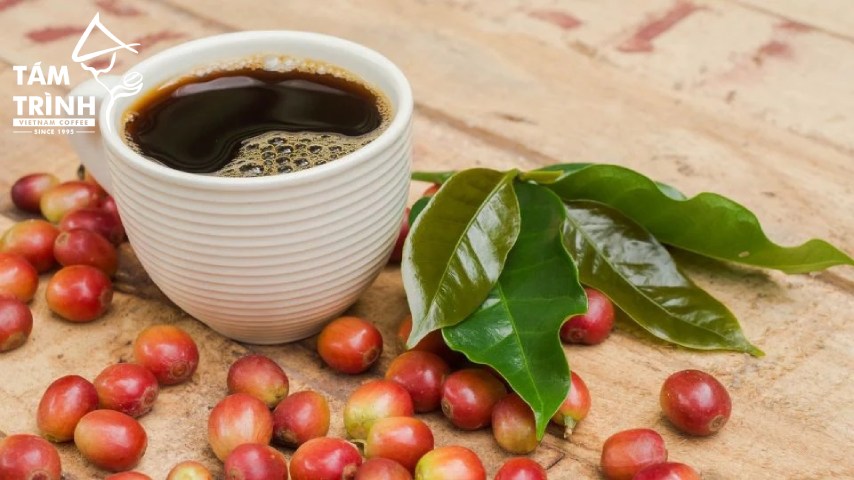
Types of Cherry Coffee
This coffee line is mainly divided into two major branches based on genetic characteristics:
Cherry Liberica: This is the original coffee type, known for its large beans and very tall trees. Liberica is often grown in lowland regions with hot climates. Its flavor is quite distinctive, sometimes carrying woody notes or light fruit aromas.
Cherry Excelsa: This is a variety of Liberica and is considered more valuable in terms of flavor. It has mild acidity, a sweet aftertaste, and a fairly distinctive aroma. Excelsa is often used in blends for premium roasted coffee products.
Cherry Coffee Growing Regions in Vietnam
In Vietnam, Cherry coffee is not grown on a large scale. It is mainly concentrated in areas with dry climates or mountainous regions.
In the Central Highlands, Cherry coffee is commonly grown in Gia Lai, Kon Tum, and Dak Lak. Farmers often maintain intercropped areas to support the ecosystem of their coffee gardens.

In Central Vietnam, Nghe An and Quang Tri are two localities with a tradition of growing jackfruit coffee because the tree can tolerate hot, dry Lao winds and intense sunlight.
Reference: Famous Coffee Growing Regions in Vietnam
In Lam Dong, Cherry coffee often appears in long-established coffee gardens in districts such as Lam Ha and Di Linh, where it serves as a windbreak to protect Arabica and Robusta plantations.
To learn more about Cherry coffee blending techniques or to order high-quality raw materials, please contact Tam Trinh Coffee for professional support.
FAQ: Cherry Coffee
What is Cherry coffee?
Cherry coffee is the common name in Vietnam for coffee varieties belonging to the Liberica or Excelsa group. This coffee is also known as jackfruit coffee because the tree has large leaves, a tall trunk, and ripe cherries that give off a light aroma similar to ripe jackfruit.
Why is Cherry coffee also called jackfruit coffee?
Cherry coffee is called jackfruit coffee because the tree has a shape that resembles a jackfruit tree: large leaves, a wide canopy, and a tall woody trunk. In addition, the ripe coffee cherries have a light aroma reminiscent of ripe jackfruit.
Is Cherry coffee popular in Vietnam?
Cherry coffee is not as popular as Robusta and Arabica. In Vietnam, this coffee type is usually grown on a smaller scale and is mainly used for blending or processing certain product lines with distinctive flavor characteristics.
What does Cherry coffee taste like?
Cherry coffee usually has a distinctive, light flavor, mild acidity, and a clean aftertaste. It may also carry light fruity or woody notes. However, the exact flavor depends on the growing region, processing method, and roasting technique.
How is Cherry coffee different from Robusta and Arabica?
Robusta is usually bold, strong, full-bodied, and high in caffeine. Arabica is often more aromatic, cleaner, and has more pronounced acidity. Cherry coffee, meanwhile, has a distinct flavor of its own, is less common, and is often used to add a unique highlight in coffee blends.
What is Cherry coffee used for?
Cherry coffee is often blended with Robusta or Arabica to create new flavor profiles and increase product diversity. Some producers also roast Cherry coffee separately for consumers who enjoy exploring unusual coffee varieties.
Does Cherry coffee contain a lot of caffeine?
Cherry coffee generally does not contain as much caffeine as Robusta. However, the exact caffeine level depends on the variety, growing conditions, and processing method.