

News
Vietnam Green Coffee Bean Quality : Characteristics Classification And Export Standards
Vietnam today holds a pivotal role in the global coffee industry. As the second-largest coffee exporter worldwide, the country contributes roughly 17% of global production, with green coffee beans accounting for the bulk of export turnover.
Yet, as the global market shifts toward quality, traceability, and sustainability, it is no longer sufficient to rely on volume. The long-term reputation of Vietnamese coffee hinges on whether its green beans meet international standards while showcasing distinctive characteristics and stories.
This article, in collaboration with Tam Trinh Coffee, explores the fundamentals of green coffee beans, the varieties Vietnam is known for, the processing methods that define quality, and the standards required to succeed in export markets.
What Are Green Coffee Beans?
Green coffee beans are the unroasted seeds of coffee cherries. Once the skin, pulp, mucilage, parchment, and silver skin are removed, the beans are dried to a stable moisture content of 10–12%.
While they may look like simple raw material, green coffee beans are the foundation of every roasted cup—their size, shape, density, and internal chemical composition dictate how they roast and, ultimately, how they taste.
For producers and buyers alike, green beans are also a measure of agricultural and processing quality: how carefully the coffee was cultivated, harvested, and handled post-harvest.

Coffee Varieties Cultivated in Vietnam
Thanks to its favorable soil and climate, Vietnam has become a coffee powerhouse. The country grows three main varieties:
Robusta – dominant, over 90% of production
Arabica – about 5%, cultivated in higher elevations
Liberica – rare, about 1%, grown in select regions
Robusta Coffee (Cà Phê Vối)
Regions: Central Highlands (Đắk Lắk, Gia Lai, Lâm Đồng, Đắk Nông)
Flavor Profile: Bold body, pronounced bitterness, low acidity, high caffeine; delivers a strong stimulating effect
Plant Traits: Round beans, hardy trees tolerant to heat and pests
Market Use: Traditional Vietnamese phin coffee, instant coffee, espresso blends
Arabica Coffee (Cà Phê Chè)
Regions: High altitudes (>1,000m) such as Cầu Đất, Lạc Dương (Lâm Đồng), Điện Biên, Sơn La, Quảng Trị
Flavor Profile: Bright acidity, floral or fruity aroma, gentle bitterness, lower caffeine
Plant Traits: Elongated beans, delicate plants that demand cool climates and careful cultivation
Market Use: Specialty coffee, single-origin roasts, premium espresso, cold brew
Liberica Coffee (Cà Phê Mít)
Regions: Grown in smaller plots in Quảng Trị and some northern provinces
Flavor Profile: Distinct woody, smoky, sometimes jackfruit-like aroma
Market Use: Niche demand, often blended for unique profiles
Processing Methods and Their Impact
Variety and terroir provide the starting point, but processing methods largely determine the cup quality of green beans. Processing stabilizes the beans for storage and defines their sensory attributes.
Natural (Dry) Processing
Process: Whole cherries are sun-dried with pulp and mucilage intact until 10–12% moisture
Cup Profile: Sweet, fruity, full-bodied
Advantages: Minimal water use, eco-friendly, simple to apply in sunny regions
Challenges: Risk of over-fermentation, mold if not carefully managed

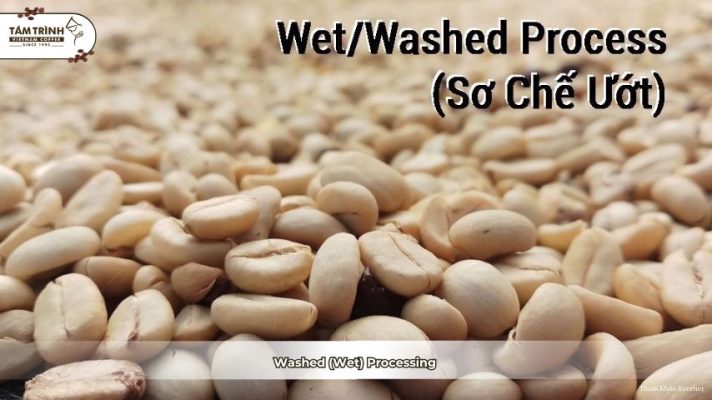
Washed (Wet) Processing
Process: Cherries are pulped, fermented in water tanks (12–24h), washed, and dried
Cup Profile: Clean, bright acidity, delicate aroma
Advantages: Allows consistent quality, especially for high-altitude Arabica
Variations: Aerobic, anaerobic, or carbonic maceration can create distinctive flavors
Honey Processing
Process: Beans are pulped but dried with some mucilage still attached
Cup Profile: Sweet, syrupy, smooth aftertaste
Subtypes: White, yellow, red, black honey—depending on mucilage levels
Positioning: Balances between washed brightness and natural sweetness
For global buyers, processing method is more than technique—it is part of the story of origin, adding cultural and branding value.

Key Quality Criteria for Export
To succeed internationally, Vietnamese green beans must adhere to strict benchmarks:
Moisture Content: 10–12% for safe storage
Screen Size: Classified by bean size (e.g., screen 16, screen 18)
Defect Rate: Evaluated under standards such as SCA grading
Uniformity: Beans must be evenly processed, sorted, and dried
Traceability: Information on variety, farm, and processing is now a global requirement
Classification in the Global Market
Green coffee is broadly segmented into three categories, each with different buyers and expectations:
Commercial Coffee
Traded in bulk, price-driven
Minimal traceability
Common in instant and mass-market blends
Premium Coffee
Balanced quality and price
Branded by origin, often certified (Fairtrade, Organic, Rainforest Alliance, UTZ)
Sought by coffee shop chains and mid-sized roasters
Specialty Coffee
Highest quality tier
Traceable to individual farms or micro-lots
Scored by SCA protocols (usually 80+ points)
Appeals to artisan roasters and connoisseur consumers
This hierarchy enables producers like Vietnam to differentiate their offerings, from bulk Robusta for commodity buyers to specialty Arabica micro-lots for discerning markets.
Vietnam on the High-Quality Green Bean Map
Vietnam’s coffee cultivation spans over a century. Today:
2nd in global exports – contributing ~17% of global supply
#1 in Robusta exports – ~40% of the world’s market
While Robusta remains the backbone, Vietnam is making strides in:
Diversifying into specialty Arabica, particularly in Lâm Đồng and northern provinces
Investing in processing infrastructure—washed stations, honey process experimentation
Moving up the value chain—from raw beans to roasted, instant, and ready-to-drink formats
The industry is gradually transitioning from volume-driven exports to quality-led branding, aligning with global sustainability and specialty trends.
Tám Trình Coffee – A Partner for Quality and Sustainability
With over 30 years of collaboration with farmers in Lâm Đồng, Tám Trình Coffee has built a reputation as a trusted supplier of high-quality green beans for the international market.
We provide:
Stable, certified quality: SCA standards, HACCP, ISO, Halal, Rainforest Alliance, 4C
Traceable origin: Down to farm and lot level
Product range: Robusta and Arabica, multiple screen sizes
Tailored services: Sorting, screening, blending, and customized processing for specific market needs
But beyond product quality, Tám Trình Coffee is committed to a sustainable value chain where farmers, partners, and clients benefit together. Our mission is to ensure Vietnamese coffee is recognized not only for its scale but for its transparency, quality, and authenticity.
The quality of green coffee beans is shaped by many factors—variety, terroir, cultivation practices, harvesting, processing, and storage. For Vietnam, leveraging these elements is key to transforming its image from a bulk Robusta exporter into a leader in high-quality coffee.
As markets increasingly demand traceability and sustainability, Vietnam’s opportunity lies in elevating its coffee identity—rooted in tradition, but refined for modern global tastes.
At Tám Trình Coffee, we are proud to stand at the intersection of farmers and global buyers, offering not just coffee beans, but a transparent and sustainable coffee journey.
Looking for a reliable partner in Vietnamese green coffee?
Reach out to Tám Trình Coffee for expert consultation and competitive export solutions.
FAQ: Green Coffee Beans
What are green coffee beans?
Green coffee beans are coffee seeds that have been processed and dried but not yet roasted, commonly used as raw material for roasting.
How are green coffee beans different from roasted coffee?
Green coffee beans are unroasted and have not developed flavor, while roasted coffee is brown and has a distinct aroma and taste.
Do green coffee beans contain caffeine?
Yes, green coffee beans naturally contain caffeine, but their flavor is not yet developed like roasted coffee.
Are green coffee beans good for health?
They contain antioxidants such as chlorogenic acid, which may support health when used properly.
What are green coffee beans used for?
They are mainly used for roasting, producing finished coffee products, or extraction in the food industry.
How long can green coffee beans be stored?
With proper storage, they can maintain quality for 12–24 months.
What types of green coffee beans are there?
Common types include Arabica, Robusta, and some high-quality specialty coffee varieties.
Are green coffee beans exported?
Yes, they are a major export product in many countries, including Vietnam.
How should green coffee beans be stored?
Store them in a cool, dry place, away from sunlight and high humidity to preserve quality.